Golf ball compression, explained without the chart
Every golf ball box seems to carry a compression number, and every forum thread seems to argue about it. The number is real. What people claim it does is mostly wrong.
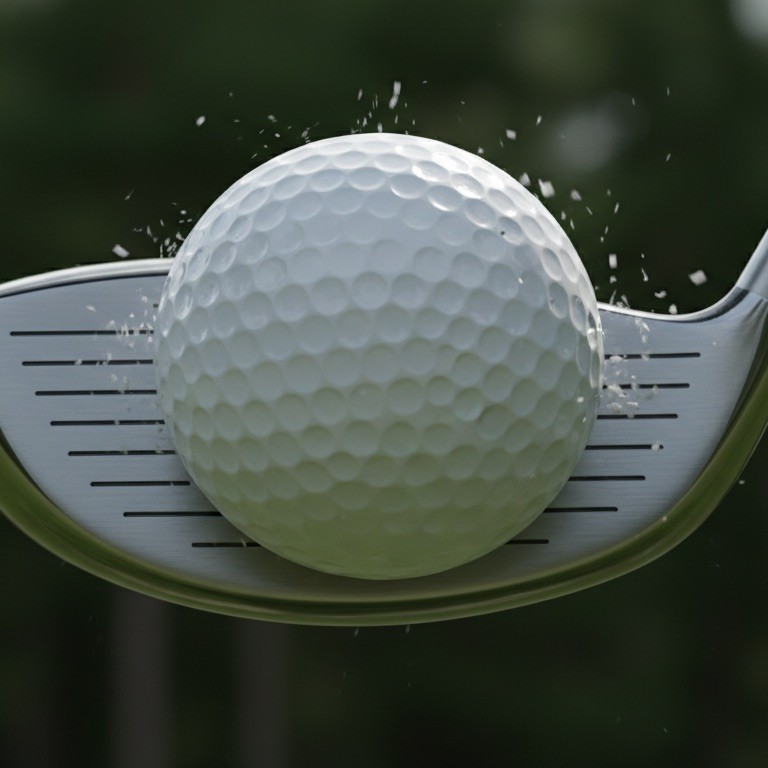
Compression measures how much a ball deforms under a fixed load. A ball rated 40 squashes more than a ball rated 90 under the same force. That is the whole measurement. It describes the construction of the ball, not the distance it produces.
Where the myth came from
For decades, the advice went like this: match your compression to your swing speed or you leave yards on the table. Slow swing, low compression. Fast swing, high compression. Charts circulated with speed ranges down the left and compression ratings across the top.
The problem is that modern balls do not behave that way. Cover material, layer count, and core design changed what happens at impact far more than compression ratings did. A 2-piece ionomer ball at 40 compression and a 3-piece urethane ball at 88 compression differ in dozens of ways. Reducing that to one number throws away most of the information.
Testing over the last decade has consistently found small distance differences between compression ratings at the same swing speed, and those differences shrink further once you account for launch conditions. You are not losing 20 yards to the wrong compression.
What compression does tell you
Feel. That is the honest answer, and it is worth more than it sounds.
A low compression ball feels soft off the putter and off the clubface. A high compression ball feels firm and gives sharper feedback. Golfers have strong preferences here, and those preferences affect confidence, tempo, and how willing you are to commit to a shot.
Some rough reference points from balls you already know:
- Wilson Duo Soft+ sits at 37. Among the softest balls sold.
- Callaway Supersoft sits at 40.
- Srixon Soft Feel and Titleist Tour Soft sit around 60.
- Titleist Pro V1 sits at 87.
- Titleist Pro V1x sits at 97, the firm end of the tour category.
Notice that the two Titleist tour balls are 10 points apart. Both are played by professionals with very different swing speeds. If compression governed distance, that would not happen.
What actually moves the needle
Three things matter more than the compression rating:
Cover material. Urethane grabs the grooves on short shots and spins. Ionomer, also sold as Surlyn, resists scuffing and spins less. This is the single biggest divide in the golf ball market.
Layer count. A 2-piece ball has a core and a cover. A 3-piece adds a mantle layer that lets the ball behave differently at driver speed than at wedge speed. A 5-piece ball like the TaylorMade TP5 extends that idea further.
Driver spin. Too much backspin off the tee costs carry and exaggerates a slice. Too little costs you the ability to hold a green. Ball construction shifts this number meaningfully.
None of those appear on the front of the box, which is part of why compression gets the attention.
How to use the number
Treat compression as a feel filter, not a fitting tool.
- Decide whether you prefer a soft or firm sensation at impact. Hit putts with two balls at opposite ends of the range and you will know within a few minutes.
- Choose your cover material based on whether greenside spin or durability matters more to your scoring.
- Use compression to break the tie between two balls that already passed the first two filters.
That ordering matters. A golfer who needs urethane for their short game should not buy a soft ionomer ball because a chart told them to.
Try it against your own game
You will get a primary recommendation and an alternate from a different brand, with the reasoning for each shown on screen.
Find your ball in about a minute
It weighs compression alongside cover material, layer count, driver distance, short game priority, and budget, then matches you against a database of 67 balls from 12 brands. It takes eight questions and about a minute.
Take the quiz →