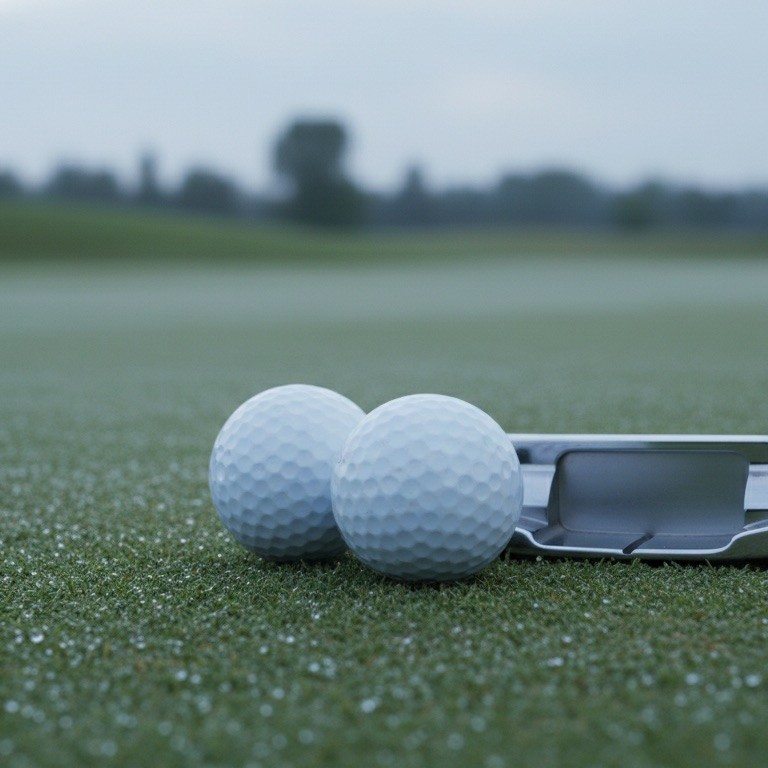
Pro V1 vs Chrome Tour: which one fits your game
These two balls sit at the top of their respective lineups, use urethane covers, price within a few dollars of each other, and land one compression point apart. Comparing them is a genuinely close call, which is why the comparison gets searched so often.
The specifications
Titleist Pro V1: 3-piece, urethane cover, 87 compression.
Callaway Chrome Tour: 4-piece, urethane cover, 88 compression.
The compression difference is noise. The layer count is not.
What the fourth layer does
A 3-piece ball has a core, a mantle, and a cover. A 4-piece ball splits the mantle into two layers with different properties. The design goal is to widen the gap between how the ball behaves at driver speed and how it behaves at wedge speed.
In practice, 4-piece constructions generally aim to hold driver spin down while keeping greenside spin high. Whether you can perceive that depends on your clubhead speed. Below roughly 95 mph, the layers do not separate as much as the engineering intends, and you are paying for behavior you are not accessing.
How to choose between them
Choose the Pro V1 if you value consistency above all. It is the most played ball in professional golf for reasons that include a long track record of tight manufacturing tolerances. If you want to buy the same ball for the next decade and never think about it, this is the safer default.
Choose the Chrome Tour if you want more from the tee. Golfers who fight high driver spin, which shows up as a ball that climbs and falls short of where it should, tend to prefer the 4-piece response.
Consider neither if you swing under 95 mph. Both balls are engineered around a speed you may not be producing. The Pro V1x at 97 compression goes further in that direction, and is the wrong answer for most amateurs even though it sounds like the upgrade.
The test worth running
Buy one sleeve of each. Do not compare them on the range, where you cannot see where the ball finishes and you will convince yourself of whatever you already believed.
Compare them on and around a practice green:
- Hit six pitch shots from 30 yards with each ball to the same pin. Watch the second bounce, which is where cover differences appear.
- Putt a dozen times with each from 15 feet. Feel off the putter face drives more preference than anything measured on a launch monitor.
- Play nine holes with each, on the same course, within a week.
That is roughly $25 and two afternoons for an answer specific to you, which is worth more than any comparison article, including this one.
Find your ball in about a minute
It weighs driver distance, short game priority, feel preference, and budget against 67 balls, including both of these. If neither fits, it will tell you that too.
Take the quiz →